
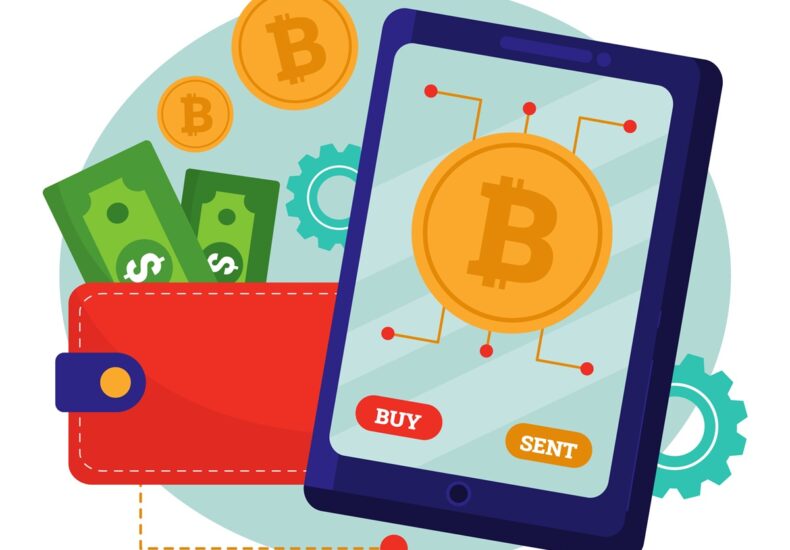
Crypto Wallets: A Safe and Secure Route to your Digital Assets
As the cryptocurrency market continues to advance quickly, securing your digital assets has been a priority for cryptocurrency investors and traders. Crypto wallets, an important part of that security, do not just store your coins, they make it easy to transact and provide meaningful control over your digital assets.
It does not matter if you are just getting started with your Bitcoin or Ethereum, or you are an experienced trader who is weighing whether to buy altcoins or NFTs: learning what crypto wallets are is an essential part of your entry into the cryptocurrency universe. So this blog will help you understand what a crypto wallet is, how it works, the types of wallets there are and a few tips for getting your assets secure.
What is a Crypto Wallet?
A cryptocurrency wallet is a software application, hardware device, or online service that lets you store the private keys you need to send, receive and spend your crypto holdings. A crypto wallet doesn’t actually store “coins” in the same way a wallet might store bills and coins. Instead, a crypto wallet stores the keys needed to prove you have ownership and authority over the cryptocurrency that you are sending and receiving. In addition, simple ownership provides preferred access to the ownership associated with establishing your account.
The wallet you use can also be linked to the blockchain network for verifying balances, verifying transactions for security and access, and allowing you full access to your holdings.__
Types of Crypto Wallets
Understanding wallet types will help you and others to find the best choice when considering your desire for security, convenience, and/or practicality.
Hot Wallets (Online Wallets)
Hot wallets are attached to the internet and are handy and easy to use, primarily in situations where you are frequently trading or spending. This could include:
- Web wallets: Accessible from a web browser. They are easy to use, but there are security vulnerabilities that can expose you to “phishing” scams or hacking.
- Mobile wallets: Applications that are downloaded to your smartphone. They are convenient for everyday transactions.
- Desktop wallets: Software that is downloaded to your computer for greater control with less security than cold wallets.
Hot Wallets provide the convenience of use, but they are at higher risk of being hacked due to the constant online connection.
Cold Wallets (Offline Wallets)
Cold wallets are wallets that store your private keys offline, which offers considerably less likelihood of being hacked. They include:
- Hardware wallets: These are devices that physically keep your keys secure offline, like the Ledger, or the Trezor wallets. The security risk is greatly diminished because if the hardware wallet is secure, the user only connects it to the computer when they are using it to perform a transaction.
- Paper wallets: Either a physical printed piece of paper, or the written down key is secured and away from any live connection to anything.
Cold wallets are preferred for long-term holdings or larger amounts of cryptocurrency because they offer a higher level of protection.
How Crypto Wallets Work
Every cryptocurrency wallet has keys that work in pairs:
- Public Key: This is your wallet address that functions like your bank account number, and it’s the key you provide when you receive funds.
- Private Key: This is your secret code that grants you the authority to spend your crypto. Losing this key means that you’ll lose access to your funds forever.
When initiating a transaction, your wallet will sign the transaction request digitally, send it to the blockchain to verify consensus, and then ultimately the blockchain will verify that you are indeed in control of your asset, all without the need for a third party.
Factors To Consider When Selecting a Crypto Wallet
There are some important factors to consider when choosing your wallet:
- Security: Choose wallets with encryption options and 2FA and backup/recovery options. Hardware wallets are the most secure.
- Compatibility: Make sure the wallet is compatible with the multiple cryptocurrencies and your exchanges or dApps.
- User Interface: New users value simple, easy to use designs.
- Control: Some wallets give users total access and control of their private keys and while others do not have third-party users use third-party users.
Important Aspects to Look for in a Crypto Wallet
When electing a wallet service, a few critical aspects to look for in a wallet are:
- Security: Look for wallets with encryption options, two-factor authentication (2FA), and back-up/recovery options. Hardware wallets are the best.
- Compatibility: Ensure that the wallet will support multiple cryptocurrencies including your exchanges or dApps.
- User Interface: A simple, user-friendly, design is especially important for new users.
- Control: Some wallets allow users to fully control their private keys, while others users rely on third-parties. A self-custody wallet will give you full control of your private keys.The Importance of Self-Custody
One of the defining principles of crypto is decentralization. Having the private keys stored in a wallet that you control (self-custody wallets) supports that principle since you will have full ownership and security. By contrast, custodial wallets are one that an exchange holds the keys to and is holding the assets on your behalf. Custodial wallets are convenient, yet they expose you to risks of hacks or restrictions on the ability to withdrawal if the exchange is hacked. Weighing the pros and cons of ease of use for a custodial wallet against your ownership and security of a self-custody wallet really depends on your risk profile, and your use case.
Securing Your Crypto Wallet
A well-designed wallet will not provide security if best practices are not followed. Here are some critical practices:
- Never share your private key or seed phrase with anyone. This is like providing your bank account number to a stranger. Whoever gets access to your private key also has access to your funds.
- Use hardware wallets for large amounts of assets. Hardware wallets provide a means to isolate all online threats giving a high level of security.
- Enable your two-factor authentication (2FA): It provides an extra layer of protection.
- Regularly back up your data and store it securely offline, in more than one physical location. Backups generally include your recovery phrases.
- Watch out for phishing attempts/links. Always check that you are at the right website before entering any information and avoid all unknown links.
- Remember to keep your software updated: Wallet developers are native to continuously patch vulnerabilities that may exist.
Popular Crypto Wallets in 2025
With so many wallets available, it can be hard to know which ones are trustworthy and reliable:
Ledger Nano X: One of the best hardware wallets, it supports hundreds of cryptocurrencies and bluetooth connectivity makes it easy to manage on the go.
Trezor Model T: If security is your concern, the Trezor Model T will be the ideal wallet for you. This hardware wallet has a touchscreen interface and supports a wide variety of coins and tokens, and has unique, innovative backup options.
MetaMask: One of the most widely used wallets among Ethereum owners and decentralized finance users, MetaMask works as both a mobile wallet and browser extension, and even allows users to swap tokens between currencies in their wallet.
Trust Wallet: Taking care of your cryptocurrency should be easy, and Trust Wallet’s straightforward mobile design and multi-coin function has caused it to be one of the most popular mobile wallets within the crypto community.
Exodus: You can obtain Exodus as a mobile and desktop wallet, and its simple interface and integration between built-in exchange brokers and portfolio tracking make it an option worthy of consideration.
The best wallet for you depends on the balance between the importance of security, ease of use, and coin support.
Wallets and the Future of Crypto
As cryptocurrencies are incorporated into everyday financial activities, wallets will develop to provide increasingly rich functionality. The formats of next-gen wallets are being informed by DeFi, NFTs, and multi-chain asset management.
Projects are also working on developing social recovery, multisig wallets and enhanced privacy features to improve security and usability..
Conclusion
A cryptocurrency wallet is not just a means of storing your digital assets; it’s a way to confidently and safely participate in decentralized finance. Understanding how to select the right wallet, why and what happens with private key management, as well as general security best practices, will all serve as key steps in your ongoing successes in crypto.
Recent Post
 Mollygram for Small Business Branding A Beginner Friendly Guide
- ParityTrial.com – A Fresh Take on Daily News & Insight
- Introducing Adrian CryptoProNetwork – Your Comprehensive Guide to Crypto Knowledge
- Market Better With FeedBuzzard: The Next Generation of Digital Marketing
- QuikConsole: The All-In-One Digital Productivity Solution for Today’s Teams
- Artaverse.org Tech Global News: Timely Updates on Culture and Innovation
- How Timewarp TaskUs Is Revolutionizing Digital Workplaces
- Exploring Top AI Tools: Perplexity, DeepSeek, ChatGPT, and Google Gemini








Leave a Reply